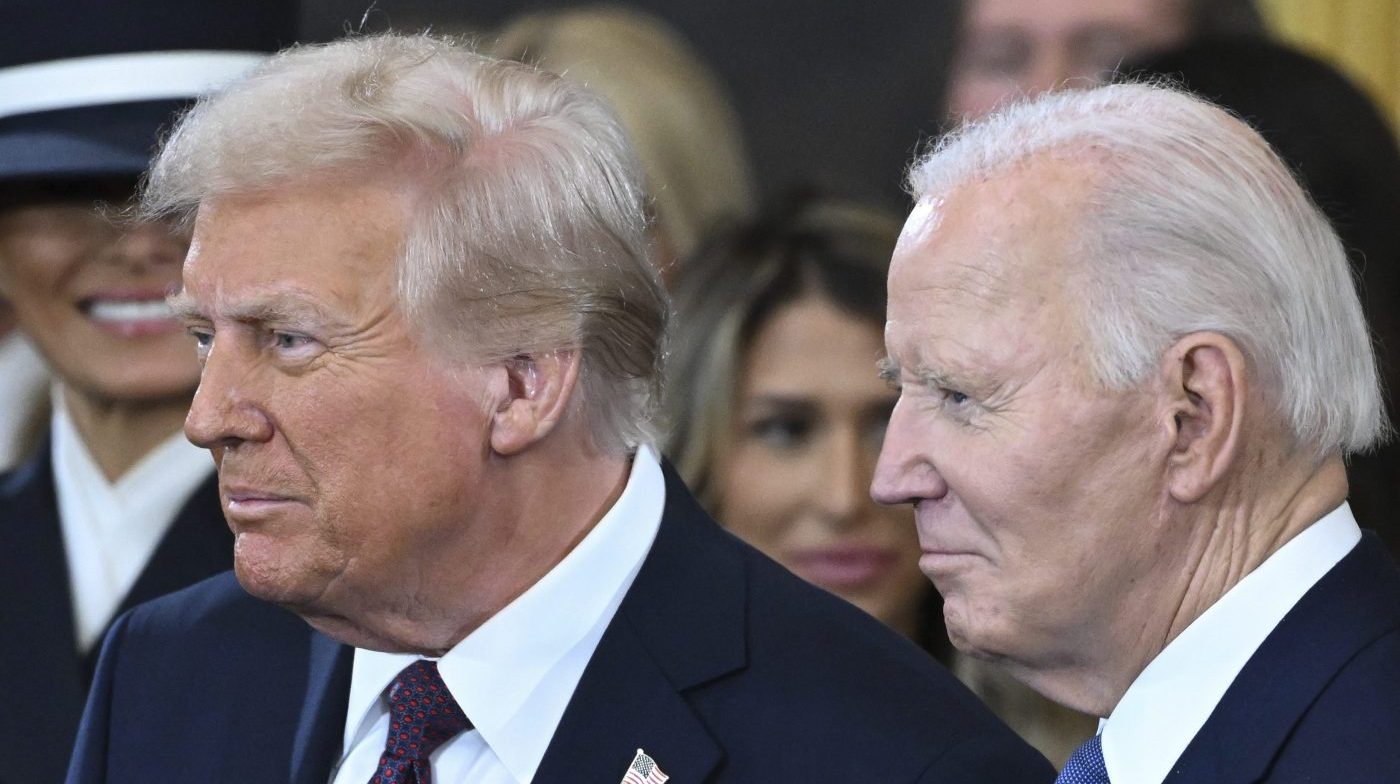
New York Times reporters Maggie Haberman and Jonathan Swan acknowledged Monday that President Trump fields more questions from the press than his predecessor, Joe Biden, but they sharply pushed back on the administration's self-proclaimed title as the most transparent in modern history.
In a clip released by C-SPAN from an interview set to air Monday evening, the two journalists—authors of the new book Regime Change: The Imperial Presidency of Donald Trump—discussed their difficulty securing a formal interview with the president for their project. Swan stated flatly: "He answers more questions than Joe Biden. He's more available. There are reporters asking him questions when they're in the pool, there's no question about that." Haberman concurred.
Despite having Trump's cell phone number, both reporters said they have spoken with him only sparingly during his term. Swan explained that brief phone calls are insufficient for the kind of deep reporting their book required. "When we want to get inside a room, the Oval, the Situation Room for the most sensitive conversations, the way to get that is not to call Donald Trump on the cell phone for three minutes. It's not that useful," he said.
Haberman emphasized that they sought a sit-down interview precisely because Trump is the book's central subject. "This is a book where he is the subject," she said. "We wanted to give him the opportunity to answer direct questions, but we also did not want it to just sort of be 'open mic night' and 'How's the news of the day, sir?'"
Data from the University of California, Santa Barbara's American Presidency Project shows that Trump held 88 press conferences in his first term and 16 as of April 20 in his second term, compared to Biden's total of 37. However, Biden's overall engagement with the press was historically low; Axios reported in June 2024 that Biden held 164 press conferences and media interviews, fewer than any modern president since Ronald Reagan. By contrast, the same analysis found Trump held 468 such events in his first term, and Barack Obama held 570.
The second Trump White House has repeatedly touted its openness, calling itself "the most transparent administration in modern American history." Haberman rejected that characterization outright. "I'm not rating him against other presidents," she said. "This is not a transparent administration. So those calls allow him to maintain that veneer while really dictating the terms and not answering much at all."
Trump's relationship with the press remains combative, often erupting into confrontations over questions, reporters, or outlets. His administration has taken steps that critics argue undermine transparency, including efforts to expand presidential removal authority and fire independent agency officials, moves that have drawn scrutiny from lawmakers and legal scholars. Meanwhile, some Republican senators have criticized Trump's staff for misleading him on key legislative votes, further complicating the narrative of a transparent White House.
Haberman and Swan's book, Regime Change, promises to delve into the inner workings of Trump's presidency, drawing on sources and documents that the reporters say required persistent, often frustrating, efforts to obtain. Their assessment of the administration's transparency suggests that, while Trump may be more visible than Biden, the substance of that engagement remains tightly controlled.