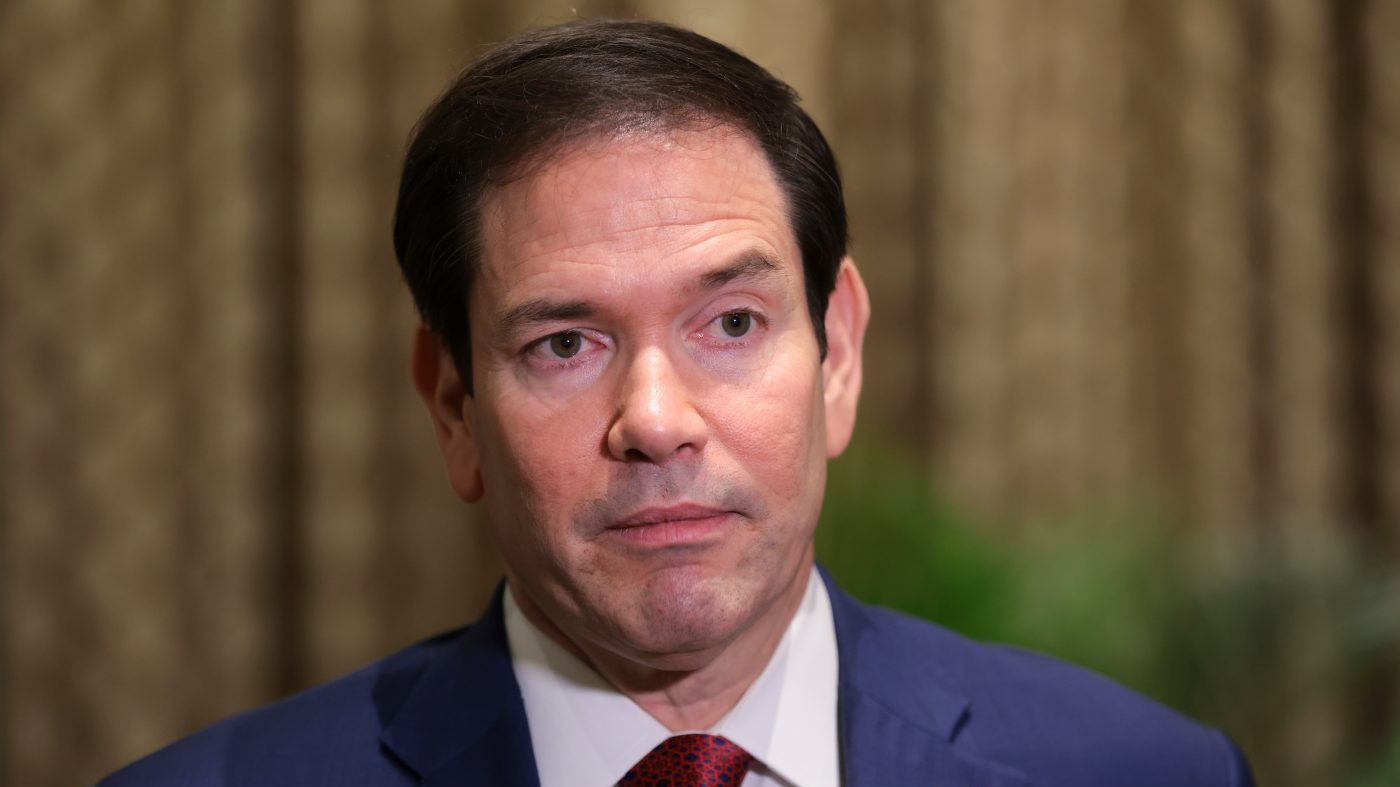
Secretary of State Marco Rubio delivered a pointed warning to Venezuelan opposition leader María Corina Machado on Monday, even as he acknowledged her return from exile. Without naming her directly, Rubio told reporters, "You're not going to street-protest your way into a democracy," according to Axios. His comments come as the Trump administration navigates a delicate power transition in Caracas, backing interim leader Delcy Rodríguez while pressing for elections.
Rubio praised Machado's return, framing it as a result of "the U.S. supported reconciliation talks which has already seen hundreds of political prisoners freed and hundreds of political opposition figures return from exile." Machado, a Nobel Peace Prize laureate, has vowed to run for president if elections are held next year. Speaking to opposition leaders in Panama, she reiterated her commitment to Venezuela's democratic transition and free elections.
A White House source told Axios that the administration's capture of Nicolás Maduro and the subsequent oil deal with Rodríguez are "the top foreign policy achievement[s] of this administration, and if the progress we made gets undone and Machado is a spoiler, nobody wins." The administration has publicly backed Rodríguez, with President Trump claiming Machado lacks popular support while Rodríguez aims to "make Venezuela great again."
Rubio, however, insisted that elections must occur and that the White House will not allow the government to stall until Trump leaves office in January 2029. He added that Rodríguez would have to declare the presidency vacant, triggering an election within six months. The secretary of state said he will personally oversee Venezuela's transition for as long as he holds his position. "Best-case scenario, I'm in this job for two more years and two months," Rubio said, according to Axios. "So, I clearly intend to see this thing well in advance of the time I leave."
The top U.S. diplomat also stressed that Caracas must "change the infrastructure of the elections ... quickly under timelines that we've established," warning that anyone interfering with the process is "doing great harm to Venezuela." This comes amid broader U.S. efforts to shift Venezuela away from the left-wing regime established by Hugo Chávez, who led an unsuccessful coup before winning the presidency in 1999. Chávez served until his death in 2013, paving the way for his vice president, Maduro, to succeed him.
Rubio's remarks highlight the administration's delicate balancing act: supporting Rodríguez while pressuring for democratic reforms. Machado's return and her presidential ambitions could complicate that strategy, as she remains a powerful symbol for opposition supporters. The administration's stance has drawn criticism from some who see it as prioritizing stability over democratic principles, while others argue it is a pragmatic path forward.
As the transition unfolds, Rubio's role as overseer signals a hands-on approach from Washington. The secretary of state's timeline—two years and two months—sets a clear deadline for progress. Whether Machado will accept the administration's framework or challenge it remains to be seen, but her return has already injected new energy into Venezuela's opposition movement.