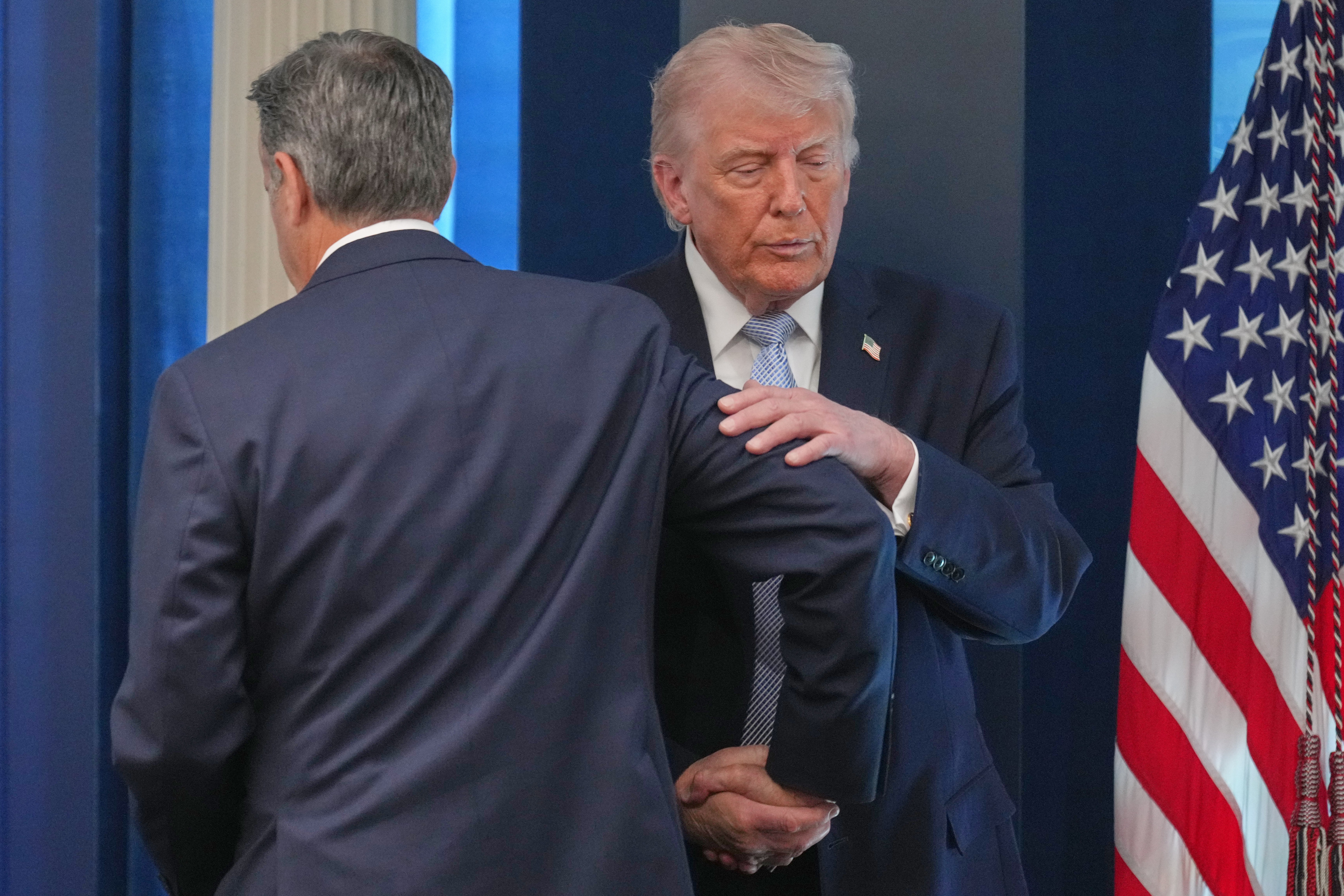
President Trump's repeated threats to withdraw the United States from the North Atlantic Treaty Organization represent what defense analysts describe as a fundamental misunderstanding of American strategic interests. These declarations have prompted NATO Secretary-General Mark Rutte to make an emergency visit to Washington, seeking to manage what allies perceive as a direct threat to the transatlantic security architecture that has underpinned Western stability for seventy-five years.
The Emergency Diplomacy
Rutte, the former Dutch prime minister known for his diplomatic rapport with the Trump administration, arrived in Washington amid growing alarm that the President might follow through on his rhetoric. The immediate catalyst appears to be European reluctance to support unilateral U.S. military action against Iran—a conflict Trump initiated without formal alliance consultation. This has led the President to publicly label NATO a "paper tiger" and suggest to an interviewer that Russian President Vladimir Putin shares this assessment.
Strategic Illiteracy in Practice
Military and foreign policy experts argue that Trump's characterization of NATO as a financial burden reflects a basic misreading of how the alliance functions. The U.S. contributes approximately 16% to NATO's common budget—about $4 billion annually—which constitutes less than 0.1% of total American defense spending. The vastly larger figures Trump cites represent what individual member states spend on their own national militaries, not payments to the alliance itself.
The strategic benefits to Washington are substantial. For that minimal common investment, the United States gains forward positioning, logistical depth, intelligence sharing, and interoperability with the world's most capable collection of democratic militaries. This network of bases and partners effectively multiplies American power projection capabilities at a fraction of what it would cost to replicate independently.
Economic and Industrial Realities
Beyond security, the economic interdependence is profound. Transatlantic trade reached $2 trillion in 2024, representing the world's largest economic relationship. European nations, which comprise most NATO members, are the largest source of foreign direct investment into the American economy, with cross-Atlantic investment exceeding $5 trillion and supporting over 16 million jobs on both sides.
The defense industrial relationship is particularly significant. European procurement and joint production related to NATO modernization anchor the U.S. defense industry. Between 2020 and 2024, more than half of Europe's arms imports came from American manufacturers, helping push the U.S. global arms export share to 43%. This industrial partnership would face immediate disruption if alliance cohesion fractured.
Misunderstanding the Treaty's Purpose
Trump's criticism that European allies haven't joined his Iran campaign reveals a fundamental confusion about NATO's purpose. The alliance is a defensive pact—members are obligated to come to each other's defense if attacked, not to participate in wars of choice initiated without consultation. Since the United States was not attacked by Iran but rather initiated military action, no treaty obligation for allied participation exists.
This transactional approach to alliances—treating them as temporary arrangements subordinate to immediate interests rather than enduring commitments—contradicts the foundational principle that has made NATO successful: replacing power politics with collective security among democracies.
Practical and Constitutional Constraints
Despite the rhetoric, practical realities constrain any unilateral withdrawal. The North Atlantic Treaty requires one year's notice for departure, and Congress has enacted legislation restricting a president's ability to exit without legislative approval. Any attempt to withdraw would likely trigger a constitutional confrontation between the executive and legislative branches.
Furthermore, unwinding seven decades of integrated command structures, basing agreements, and joint planning would take years, creating dangerous security vacuums. European allies, already questioning American reliability after Trump's unconventional proposals regarding Iran and his refusal during one episode to rule out force against NATO member Denmark, are preparing contingency plans.
Broader Political Context
The NATO controversy occurs alongside other administration actions that have strained international relationships, including threatened tariffs against nations supporting Iran and the withdrawal from multiple international agreements. This pattern has created what some analysts describe as a destabilizing cycle of crisis creation that undermines long-term strategic planning.
Despite these tensions, domestic political dynamics show no clear electoral penalty for this approach, creating uncertainty about whether traditional alliance structures will survive the current administration. What remains clear to defense professionals is that abandoning NATO would constitute the voluntary surrender of America's most significant strategic advantage—one that no rival power, including China or Russia, can replicate through any amount of spending.