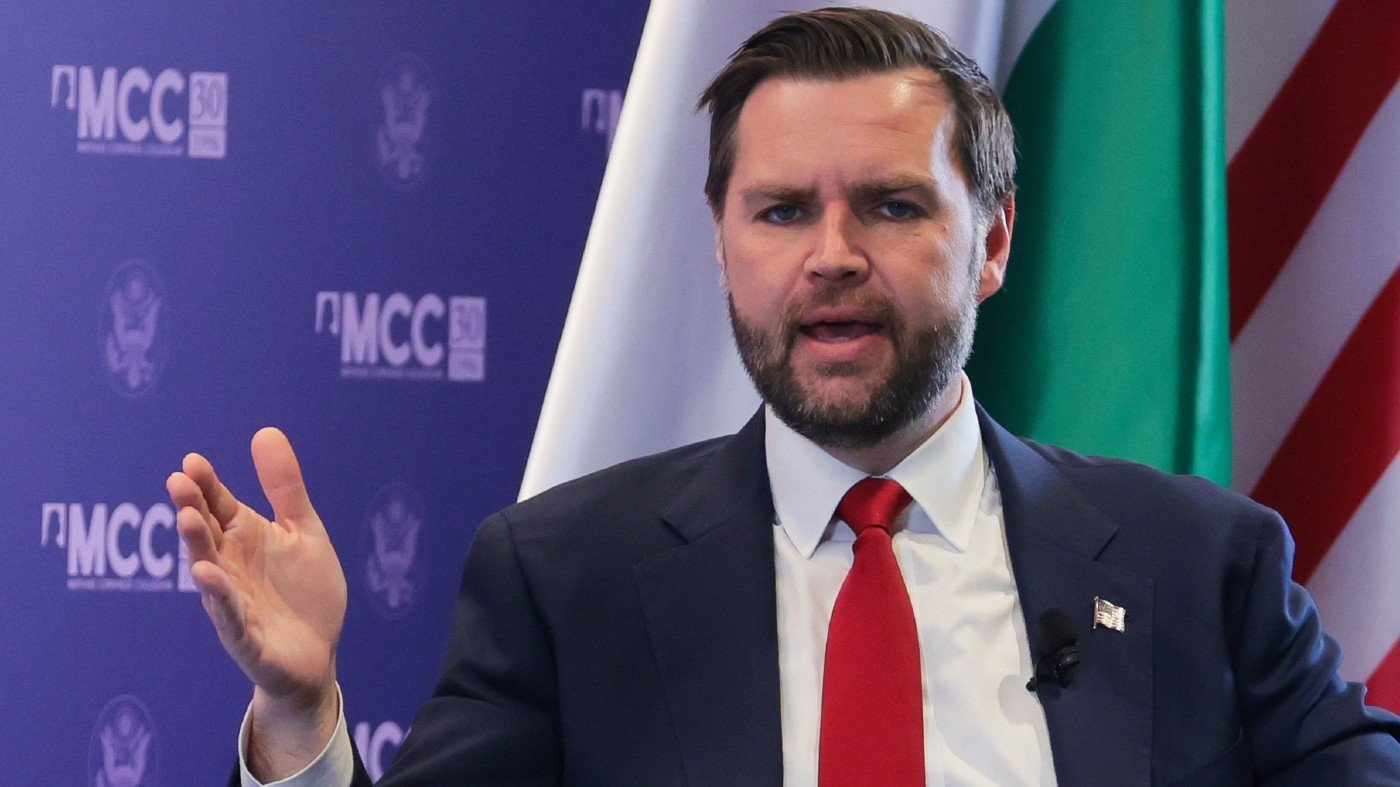
Vice President JD Vance has publicly framed the nascent ceasefire between the United States and Iran as a precarious arrangement, labeling it a "fragile truce" during a diplomatic visit to Hungary on Wednesday. His comments underscore the administration's public skepticism even as it moves toward formal negotiations.
"If the Iranians are willing in good faith to work with us, I think we can make an agreement," Vance stated. He immediately followed with a stark warning: "If they're going to lie, if they're going to cheat, if they're going to try to prevent even the fragile truce that we've set up from taking place, then they're not going to be happy."
Vance Points to US Leverage
The Vice President emphasized that Washington retains substantial power to enforce the deal. "What the president has also shown is that we still have a clear military, diplomatic, and maybe most importantly we have extraordinary economic leverage," he said. Vance indicated that while President Trump has directed his team to negotiate, the alternative for Iran is severe. "If the Iranians don't do the exact same thing, they're going to find out that the president of the United States is not one to mess around."
The comments follow President Trump's announcement late Tuesday of another temporary pause on U.S. military action against Iran, contingent on the regime reopening the strategic Strait of Hormuz. Trump characterized a ten-point proposal received from Tehran as a "workable basis on which to negotiate."
Iran's Demands and Forthcoming Talks
According to reports from Iranian state media, the proposal's points are significant, including continued Iranian control of the Strait of Hormuz, a complete U.S. military withdrawal from the Middle East, and the lifting of all primary and secondary sanctions. The administration's approach to these demands, including floating a potential joint toll venture for the Strait, remains a central question.
Direct talks between U.S. and Iranian officials are scheduled to begin in Islamabad on Friday. White House Press Secretary Karoline Leavitt confirmed Tuesday that planning for in-person discussions was ongoing, but cautioned that "nothing is final until announced by the president or the White House."
The diplomatic push comes amid a backdrop of extreme rhetoric from the President. Earlier on Tuesday, Trump threatened that "a whole civilization will die tonight never to be brought back again" unless "something revolutionary wonderful" occurs to secure a deal. This pattern of crisis diplomacy has drawn criticism from some quarters, with figures like critics warning against a manufactured 'crisis cycle'.
Broader Regional and Political Context
The ceasefire and planned negotiations occur as other regional actors express concern. Israel has conducted major strikes in Beirut, explicitly stating that Lebanon is excluded from any US-Iran understanding. Domestically, the process faces scrutiny, with Senator Lindsey Graham demanding a Congressional vote on the ceasefire to ensure transparency.
Vance's role in the administration's Iran policy appears pivotal. He has previously warned the President that a full-scale war with Iran would trigger regional chaos and betray voter mandates. His characterization of the current deal as fragile suggests he remains a cautious voice within the White House, balancing the push for a deal with a hardline on enforcement.