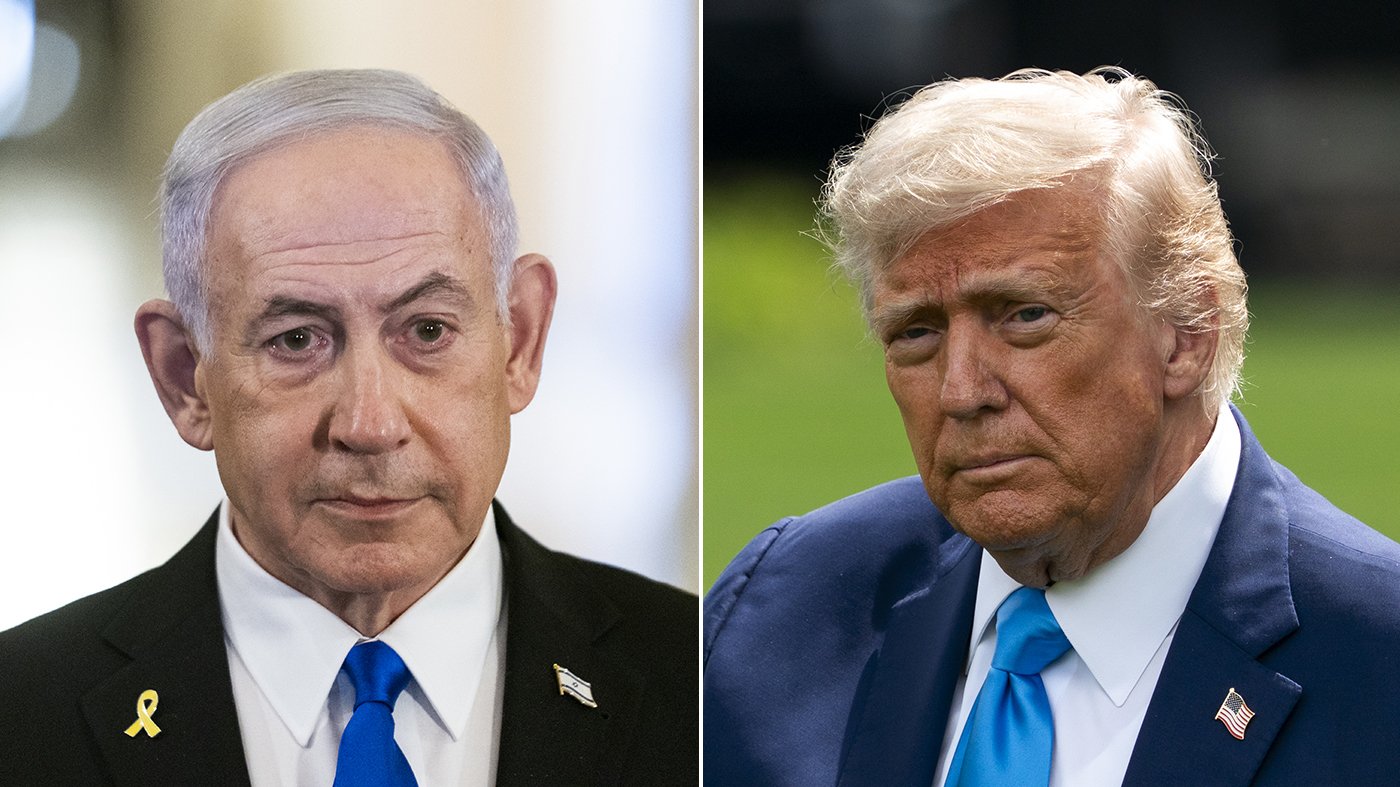
Israeli Prime Minister Benjamin Netanyahu openly defied President Donald Trump on Monday by ordering a military strike on Iran, directly contradicting Trump's calls for a ceasefire and escalating a growing rift between the two allies over how to handle the Middle East conflict.
For months, Trump and Netanyahu had coordinated closely on major military operations against Iran, with the Trump administration delivering key policy wins for Israel—relocating the U.S. embassy to Jerusalem, recognizing Israeli sovereignty over the Golan Heights, and securing the return of hostages from Gaza as part of a ceasefire with Hamas. But that alignment has frayed as Trump pushes for a diplomatic end to the Iran war.
According to reports, Trump expressed frustration with Netanyahu during a phone call Sunday, reportedly cursing at the Israeli leader for escalating hostilities in Lebanon and demanding that Israel not retaliate against Iranian drone strikes. “I call the shots. I call all the shots. He [Netanyahu] doesn’t call the shots,” Trump told the Financial Times in an interview Sunday.
Yet hours after those remarks, Netanyahu authorized a strike on Iran, targeting seven aerial defense systems and a petrochemical facility in southwestern Iran used for weapons production, according to the Israel Defense Forces. The move was in retaliation for Iranian missiles that struck northern Israel—the first such attack since a ceasefire took effect in April. That ceasefire had been triggered by an Israeli strike on Hezbollah in Beirut, which Tehran viewed as a violation.
“They thought they would fire at Israel from Lebanese territory and from Iran—and we would not act,” Netanyahu said in a statement Monday, translated from Hebrew. “That did not happen, and it will not happen. Not on my watch!” He added that he told Trump “Israel has a full right to self-defense, and we are exercising it to the extent necessary.”
Trump responded on Truth Social by calling for an “immediate CEASEFIRE,” warning that “final negotiations on ‘Peace’ are proceeding, subject to ignorance or stupidity getting in its way.” But behind the scenes, the Wall Street Journal reported that Trump privately backed down from his demand for restraint, instead advising Netanyahu to carry out a “limited” strike to avoid escalation. A source familiar with the call confirmed that account to The World Signal.
The White House referred questions about the call to Trump’s comments to Fox News, where he told correspondent Trey Yingst he was “not happy” about the Beirut strike but acknowledged ongoing Iranian missile fire complicates negotiations. “What I would suggest to Iran, you’ve shot your missiles, that’s enough, get back to the table and make a deal,” Trump said.
Analysts say the tensions reflect divergent U.S. and Israeli interests. Eric Edelman, a former senior Pentagon and State Department official under Presidents George W. Bush and Bill Clinton, noted that Trump has signaled he won’t go back to war with Iran unless an American is killed—a stance he called “a permission slip to kill other people in the region, notably Israelis.” Yaakov Amidror, a retired IDF major general and former national security adviser to Netanyahu, warned that Israel is wary of any nuclear deal that mirrors the 2015 Joint Comprehensive Plan of Action (JCPOA), which Trump withdrew from in 2018. “I hope we’re not facing the same problem with this administration,” Amidror said.
Trump faces competing pressures: Israel demands a hard line on Iran’s nuclear and missile programs, while domestic concerns over energy prices push him to reopen the Strait of Hormuz. The contours of an initial deal have already drawn fire from Iran hawks, who argue it sidesteps missile issues and punts on dismantling enrichment capabilities—echoing criticisms of the Obama-era JCPOA. As negotiations continue, the Netanyahu strike underscores how fragile the U.S.-Israel partnership has become.