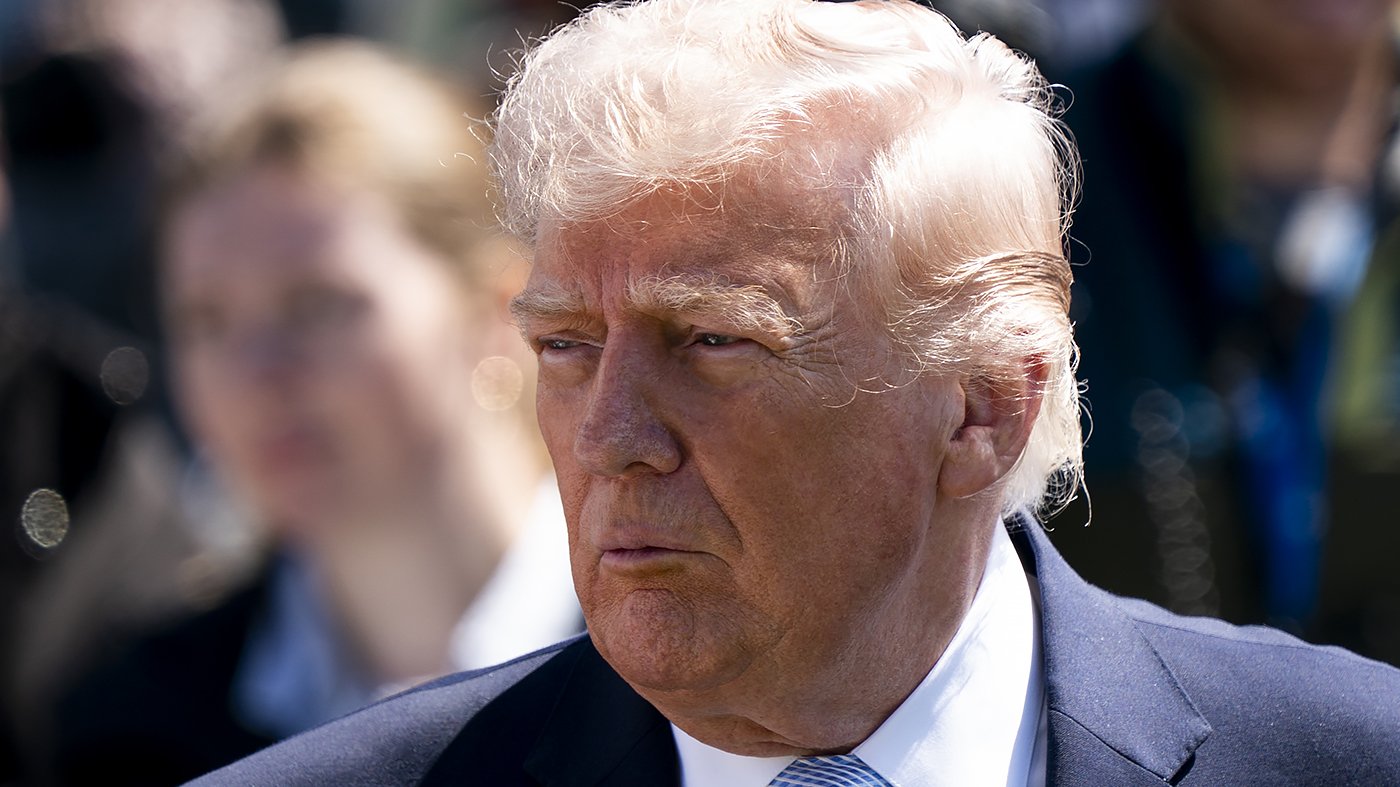
President Donald Trump has declared the temporary ceasefire agreement reached with Iran a decisive win for the United States, framing the diplomatic breakthrough as the direct result of maximum military and economic pressure. In an interview with Agence France-Presse, the president stated there was "no question" the arrangement represented a "total and complete victory" for American interests.
Trump indicated he believes China played a pivotal role in convincing Iran to enter negotiations, though he provided no specific evidence. "We have a 15-point transaction, of which most of those things have been agreed on," he told the outlet. "We'll see what happens. We'll see if it gets there." The president also asserted that the issue of Iran's stockpile of enriched uranium would be "perfectly taken care of, or I wouldn't have settled," without offering further technical details.
White House Touts Military Leverage
White House press secretary Karoline Leavitt amplified the president's triumphant tone, crediting U.S. military actions with creating the conditions for diplomacy. "The success of our military created maximum leverage, allowing President Trump and the team to engage in tough negotiations that have now created an opening for a diplomatic solution and long-term peace," she stated on social media. Leavitt also highlighted the reopening of the Strait of Hormuz as a key concession, adding, "Never underestimate President Trump's ability to successfully advance America's interests and broker peace."
The agreement, which also involves Israel, was finalized mere hours before a deadline set by Trump, who had threatened Iran's "whole civilization" if Tehran did not reopen the critical waterway. When asked by AFP if he would revive that threat, which drew sharp condemnation from congressional Democrats, Trump replied, "You're going to have to see." The timing for the ceasefire's implementation remains unclear.
Strait Reopening and Regional Tensions
The plan to reopen the Strait of Hormuz, closed since hostilities escalated in late February, includes a controversial provision for transit fees. According to regional officials, vessels passing through will pay tolls directed toward Iran's reconstruction efforts. Trump noted on his social media platform that the U.S. would assist in managing the "traffic buildup," stating American forces would "be loading up with supplies of all kinds, and just 'hangin' around' in order to make sure that everything goes well." This aligns with reported administration discussions about a joint financial venture for the strait.
Despite the announced deal, regional security incidents continued. Missile and drone attacks persisted in the hours after the agreement, with the United Arab Emirates reporting interceptions and Saudi Arabia, Kuwait, and Bahrain issuing alerts. Iranian missiles also struck southern Israel, triggering warning sirens. The ongoing violence underscores the fragility of the situation, a point emphasized by critics like Senator JD Vance, who have warned Tehran against acting in bad faith.
The domestic political reaction has been sharply divided. While Trump allies have celebrated the outcome, with figures like Pete Hegseth calling it a 'decisive victory', congressional Democrats have denounced the president's earlier threat against Iranian civilization and called for greater legislative oversight. Senator Lindsey Graham has demanded a formal congressional vote on the ceasefire, arguing the public needs 'sunlight' on the terms.
The agreement places a renewed focus on the long-standing objective of halting Iran's nuclear program, which Tehran maintains is for peaceful purposes. The coming days will test the durability of the ceasefire and the specifics of the 15-point plan, as the administration seeks to convert a temporary halt in fighting into a more stable diplomatic arrangement.